Wings, Claws and Coastlines
A travelogue through Sydney, Cairns and Melbourne, in the company of Australia's birds and animals
Sydney: Harbour Lights and First Encounters
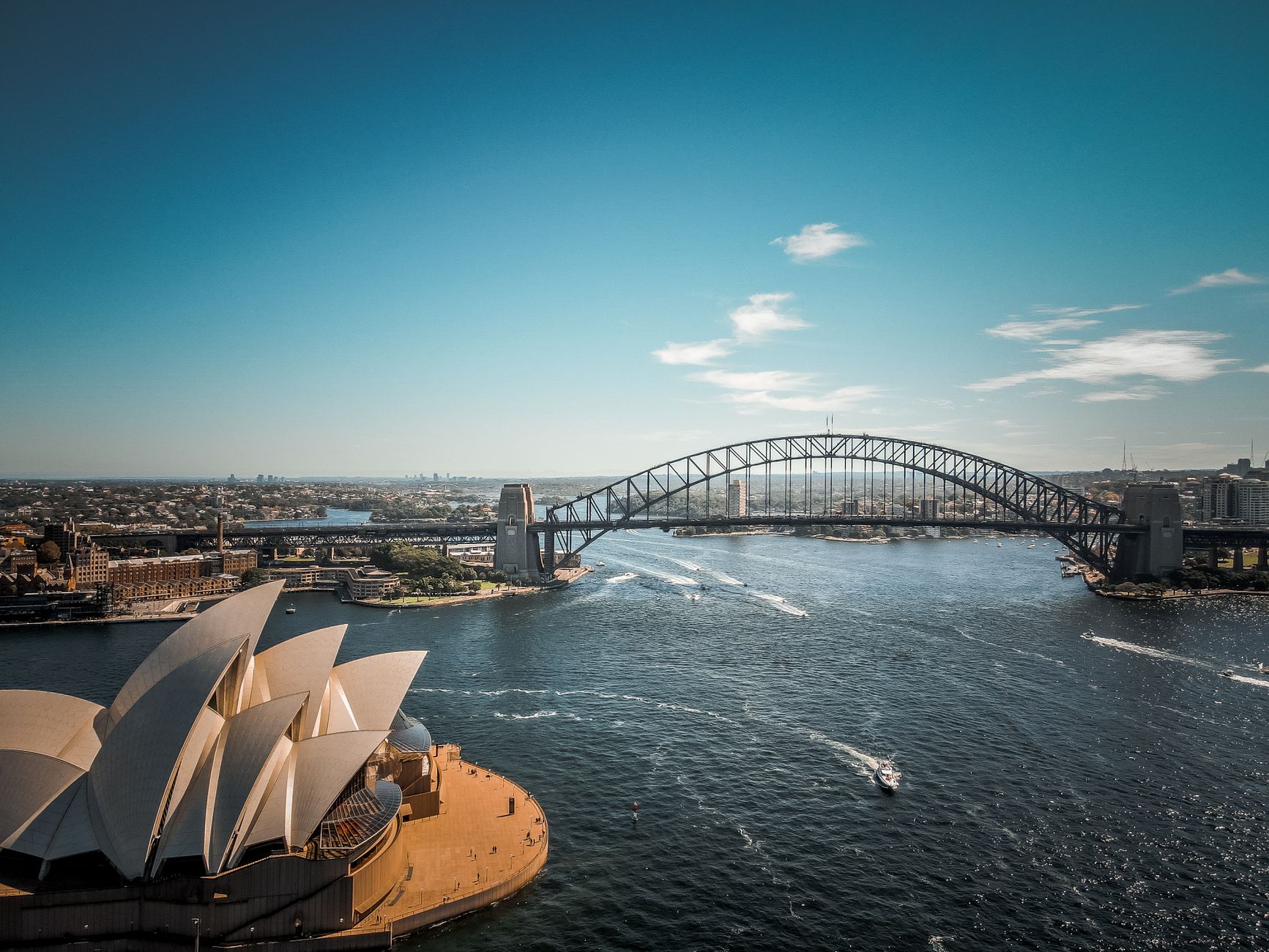
Our Australian journey began where most do: on the edge of Sydney Harbour, staring at the white sails of the Opera House. By day they gleam like seashells; by dusk they glow gold. But the first locals to greet me were not people. Rainbow lorikeets screamed across the sky in flashes of green, red and blue, and a white ibis, the city's famously unbothered "bin chicken", strutted past my table as if it owned the waterfront.
The Rocks: Stonecutters and Rats
A short walk from the harbour lies The Rocks, Sydney's oldest quarter. Its sandstone lanes were carved out by convict stonecutters, men who cut the very blocks that built the colony. Walking the narrow alleys, you can feel how cramped and rough life was here. The area's history has an animal chapter too. In 1900, when plague arrived on ships, the rats that lived in the crowded wharves and slums became public enemy number one, and rat trapping became a daily civic duty. It is a sobering reminder that in this city, animals and people have always shared space, not always happily.
A Table of Australian Flavours
Sydney is a place to taste the country. I tried fresh Sydney rock oysters, briny and sweet straight from the shell, then a barramundi fillet, crisp-skinned and buttery, from a fish that swims the northern rivers. For the adventurous there is kangaroo steak, lean, deep and gamey, best served rare. And for the true carnivore, a towering tomahawk steak, bone and all, was a meal fit for a stockman we shared with my friend Liz and beloved hubby, in-fact it was their gracious treat we enjoyed together. I even tried crocodile skewers without any regret as one of my classmate narrated a story of Netflix series depicting old women were eaten up by crocodile in Florida, mistaken our beloved and less aggressive cousin Alligator as crocodiles. I had eaten the crocodiles bites with a vengeance as if I am conquering the pre historic animal before it finishes off me. Eating here is a way of understanding the land: the sea, the rivers, the outback and the paddocks, all on one plate.
Sydney Zoo: Meeting the Whole Continent
To meet Australia's wildlife in one day, I headed to Sydney Zoo in the western suburbs. It is a big, modern zoo devoted to Australian animals, and it was the perfect introduction. Kangaroos and wallabies lounged in the shade. A wombat shuffled around like a furry bulldozer. Tasmanian devils bickered over a meal, and the koalas did what koalas do best: absolutely nothing, for up to twenty hours a day. Among the birds, the laughing kookaburras were the stars, throwing back their heads and cackling as though they had heard the world's best joke. A flightless emu peered at me with prehistoric disdain. The Australian slithering creatures were displayed with in their scary scaling , with their devilish face resting upon the coiled body. I have never seen such scary Gothic T shirt print looking snake heads in my life, at least at that close. Even after walking through the nature’s own classroom with importance of all animals and flora in the ecosystem, I still cannot get rid of my fearful feeling of venomous snakes. Sorry slitherophilians.
Tip: for a different view, Taronga Zoo sits right on the harbour with Sydney's skyline as its backdrop.
Cairns and the Tropical North: Reef, Rainforest and Crocodiles
A short flight north and the air turned thick and warm. Cairns is the gateway to two of the planet's oldest wonders: the Great Barrier Reef and the Daintree Rainforest.
The Great Barrier Reef
I boarded a boat and sailed out over turquoise water. Then I slipped beneath the surface into another world. Parrotfish munched on coral with a sound like crunching biscuits. Clownfish darted in and out of their anemones, and a green sea turtle glided by, calm and unhurried. Giant clams, shimmering in purple and blue, lay open on the seabed. At one point, I was afraid of moving my paddles that I may break the corals, we were that close to the reef into magnificent display of stag horns, cabbage, table and brain corals.
Above the waves, seabirds such as terns and boobies wheeled over the cay, reminding me that the reef feeds the skies as well as the sea.
Port Douglas and Mossman Gorge
Port Douglas is a relaxed seaside town with palm-lined streets and a sleepy village feel. From here I drove to Mossman Gorge, where clear water tumbles over granite boulders beneath the canopy. Walking the forest trails, I saw metallic blue Ulysses butterflies flashing like scraps of sky and heard the strange calls of birds I could not see. The Kuku Yalanji people, the traditional custodians, have cared for this land for tens of thousands of years, and their stories give the forest its voice.
Daintree River: Cruise, Ferry and Crocodiles
The highlight of the north was a dawn cruise on the Daintree River. Mist lifted off the water as our guide steered slowly along the mangrove edge. Kingfishers perched on branches, and a tiny azure kingfisher flashed past like a jewel. Then someone whispered: "Crocodile."
A saltwater crocodile lay half submerged on the bank, motionless and ancient. Our guide explained their remarkable family life. During the wet season, a female builds a large mound nest from leaves, grass and mud, where the heat of rotting vegetation incubates her eggs. The temperature of the nest even helps decide whether the hatchlings will be male or female. She stays close to guard it, and when the babies call from inside their eggs, she helps them out and carries them gently to the water in her jaws. Courtship and mating take place in the warmer months, with males bellowing and splashing to impress a mate. Such tenderness from such a fearsome animal was humbling. How ever we respected the warning signs on beaches about salt water crocs can be sweeping around the shallow and inviting waters, clearly stayed away from wetting the feet in the waters, saving feet for further expedition.
We then crossed the river on the small cable ferry, rolling into the heart of the Daintree. Here, if you are lucky and quiet, you might spot the southern cassowary, a giant flightless bird with a blue neck and a helmet-like casque. It is one of the rainforest's most important gardeners, spreading the seeds of many rainforest trees. I did not see one that day, but I saw its footprints in the mud, and that was thrilling enough.
A Tropical Forest Walk
On foot, the rainforest was a symphony. Strangler figs wrapped their roots around host trees. Giant ferns unfurled overhead. Frogs trilled after the rain, and a pair of scrub fowl scratched busily in the leaf litter, building mounds to incubate their eggs. Everything here is connected, and nothing is wasted.
Sugar Cane Country and the Rain Tree
On the drive between Cairns and Port Douglas, fields of sugar cane rippled in the wind. Sugar has shaped North Queensland for over a century, and it brought an animal story with it. In the 1930s, cane toads were introduced to fight beetles that were damaging the crops. The experiment failed badly, and the toads spread across northern Australia, becoming one of the continent's best-known pests.
Near town, I stood beneath a vast rain tree, its great umbrella of branches shading the road. This species originally came from tropical America and has long been planted in the tropics for shade. It is a reminder of how people have carried plants, and sometimes problems, across the world.
Melbourne and Phillip Island: Koalas and Penguins
The final leg took me south to cooler air, coffee culture and, best of all, two of Australia's most beloved animals.
Koala Encounter
At a wildlife sanctuary, I finally met and touched a koala up close, gripping a eucalyptus branch with its sleepy, solemn face. My excitement was paramount to child’s happiness. Koalas are fussy eaters, living almost entirely on eucalyptus leaves, which are tough, low in energy and toxic to most animals. So how do they survive?
The secret lies in their gut and in a mother's care. A baby koala, called a joey, spends its first months in its mother's pouch. Around weaning time, it eats a special soft substance called pap from its mother. Pap carries the gut bacteria the joey needs to digest eucalyptus safely and neutralise its poisons. Without it, the young koala could not handle its own diet. It is a very intimate lesson in survival, and I watched a mother with her joey clinging to her back, utterly content.
Phillip Island: The Penguin Parade
An easy drive from Melbourne, Phillip Island is home to the famous penguin parade. As the sun sank over Summerland Beach, I took my seat on the grandstand with the cold wind whipping off the sea. Then, out of the surf, they came: little penguins, the smallest penguin species in the world, standing barely knee high. They arrived in tiny rafts, waddled up the sand and hurried toward their burrows in the dunes.
These penguins nest in burrows among the tussock grass, and breeding season is the busiest time. Parents take turns incubating eggs and guarding chicks, while the other heads out to sea to fish all day and returns at dusk with a belly full of food. Chicks wait in the burrows, calling out loudly as their parents approach. The colony's numbers have been watched closely over the years, and conservation work such as protecting habitat, controlling foxes and managing visitors has helped these birds hold on. Watching them, I felt both delight and responsibility.
Farewell
Australia is a land where the animals are as much a part of the journey as the places. I came for the Opera House and the Reef, and I left remembering a kookaburra's laugh, a crocodile mother's care, a koala's pap, and a line of penguins hurrying home at dusk. The country's wildlife is strange, tender, ancient and fragile, and it deserves our respect.
If you go, go slowly, keep your distance, listen carefully and let the wild things set the pace.
End of journey.
Leave a Reply